Facing Fear

Facing fear, 2021
First experiments with “right-brained writing:” facing the fear of the unknown
I began a five-day, self-imposed writing retreat with an experiment: rather than immediately trying to produce something coherent, useful, or academically acceptable, I would pay attention to the experience of writing itself.
Almost immediately, I became aware of an underlying rumble—a buzz, a frequency, a kind of quiver beneath the surface. Writing seemed to activate layers of experience I don't normally pay much attention to: familiar doubts, habitual ways of working, and quieter fears about what might happen if I moved beyond what I already knew how to do.
I began listening to those voices:
Don't leap. It's unknown.
Stay on the well-traveled highway you know will lead somewhere.
Do the task. Fulfill the checkbox.
Be of service.
Work hard. Be responsible.
Be efficient.

pockets of fear and anxiety
Underneath them seemed to be another layer: the unconscious assumptions that make the familiar feel safe. Stay on course and things will work out. You will be useful. Your work will have value. You will know where you're going.
Veering off the road meant giving some of that certainty up.
So, I decided to go off-roading.
Suddenly, I was off the ledge and into the unknown.

The leap into the unknown
Each day, I wrote from my present experience, paying attention to sensations, images, metaphors, resistance, and whatever else emerged. I was curious: What would it look like to write from my "right brain"?
By the third day, words no longer seemed like the best way to capture what I was experiencing. I began painting instead.
The images became a way of tracking the experience of moving through a liminal landscape —- the edges, fear and discomfort that arose, disorientation and thresholds, along with openings, the unexpected and ongoing conversations with trust as a guide. The experience began to take a visual form.
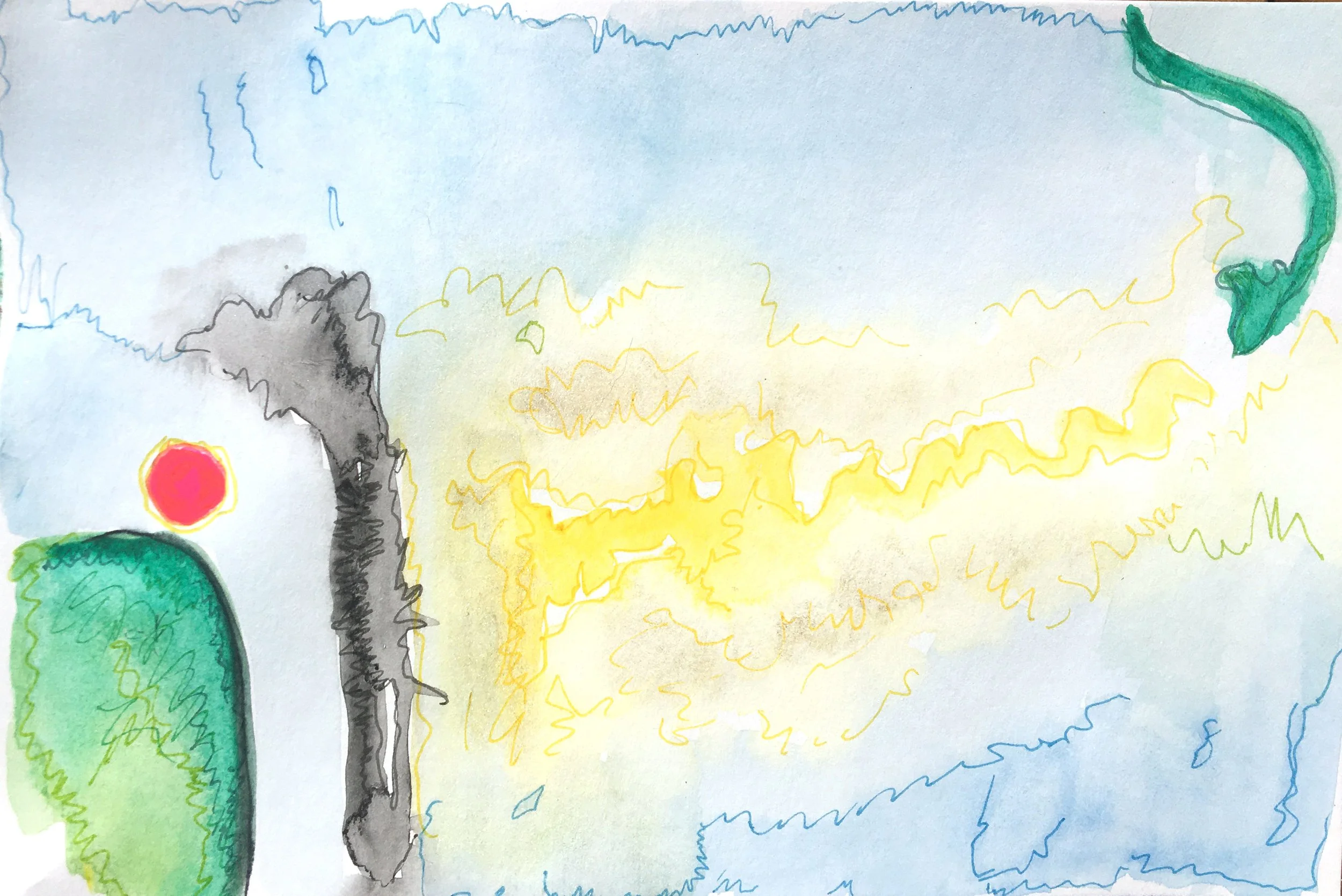
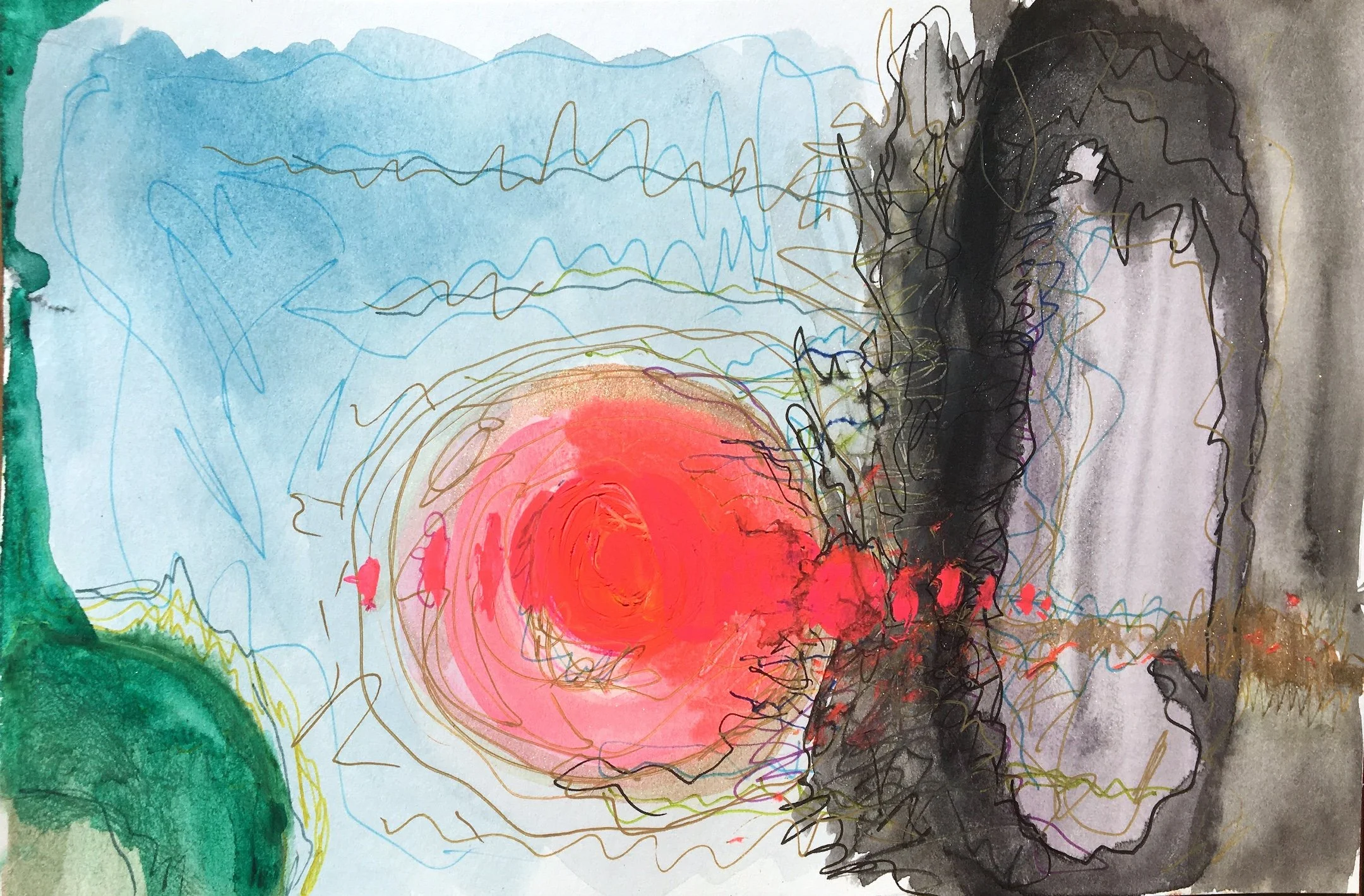
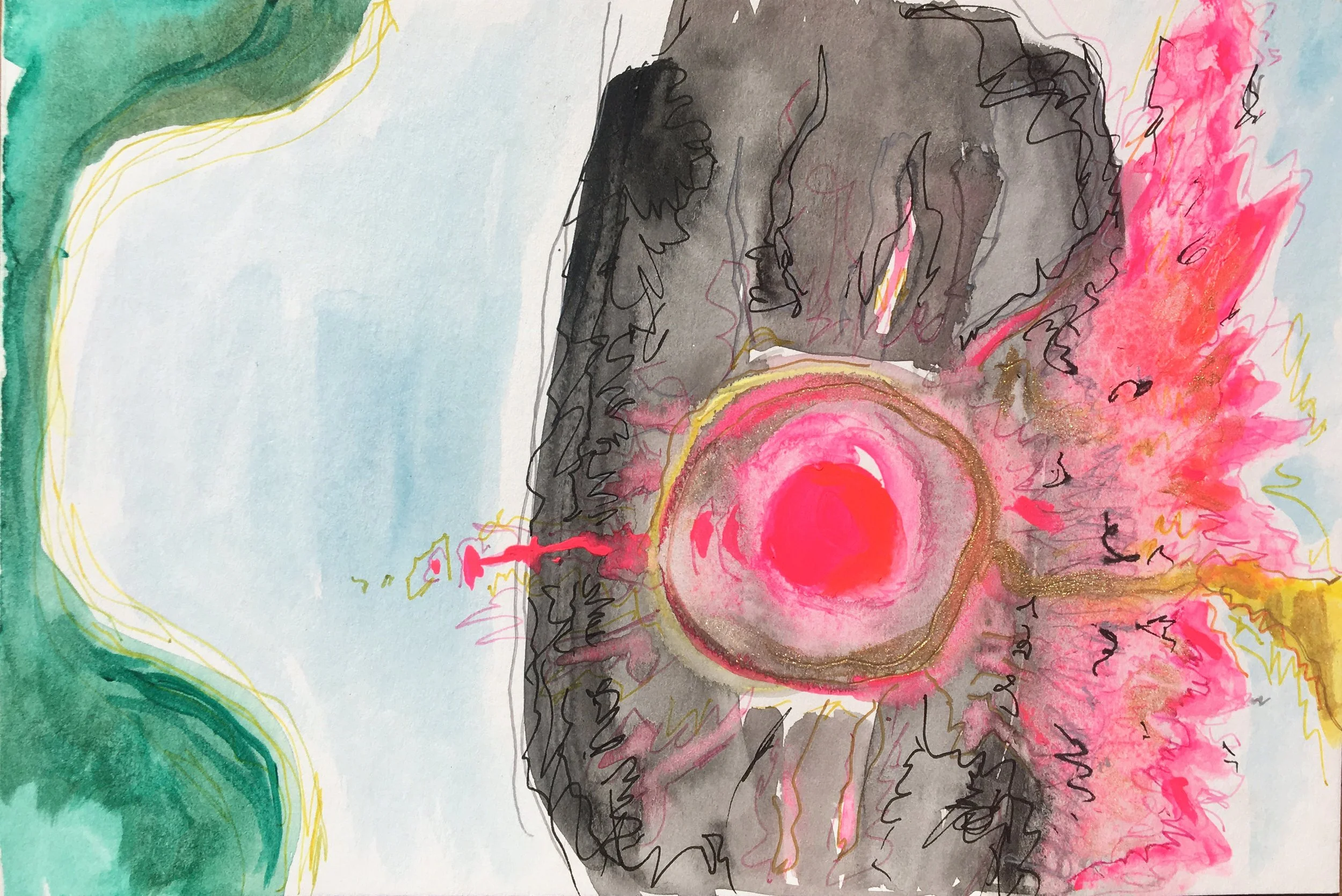
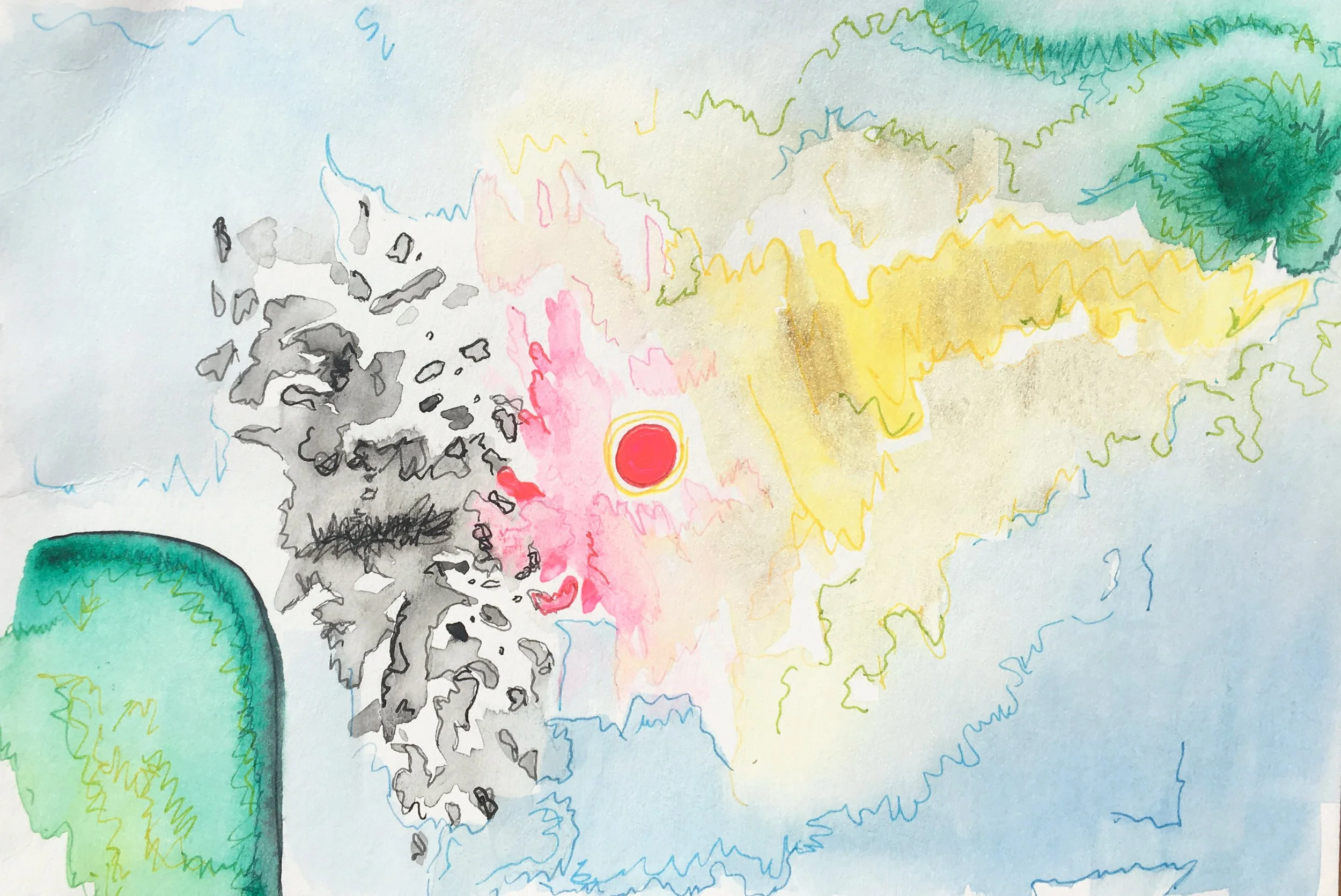
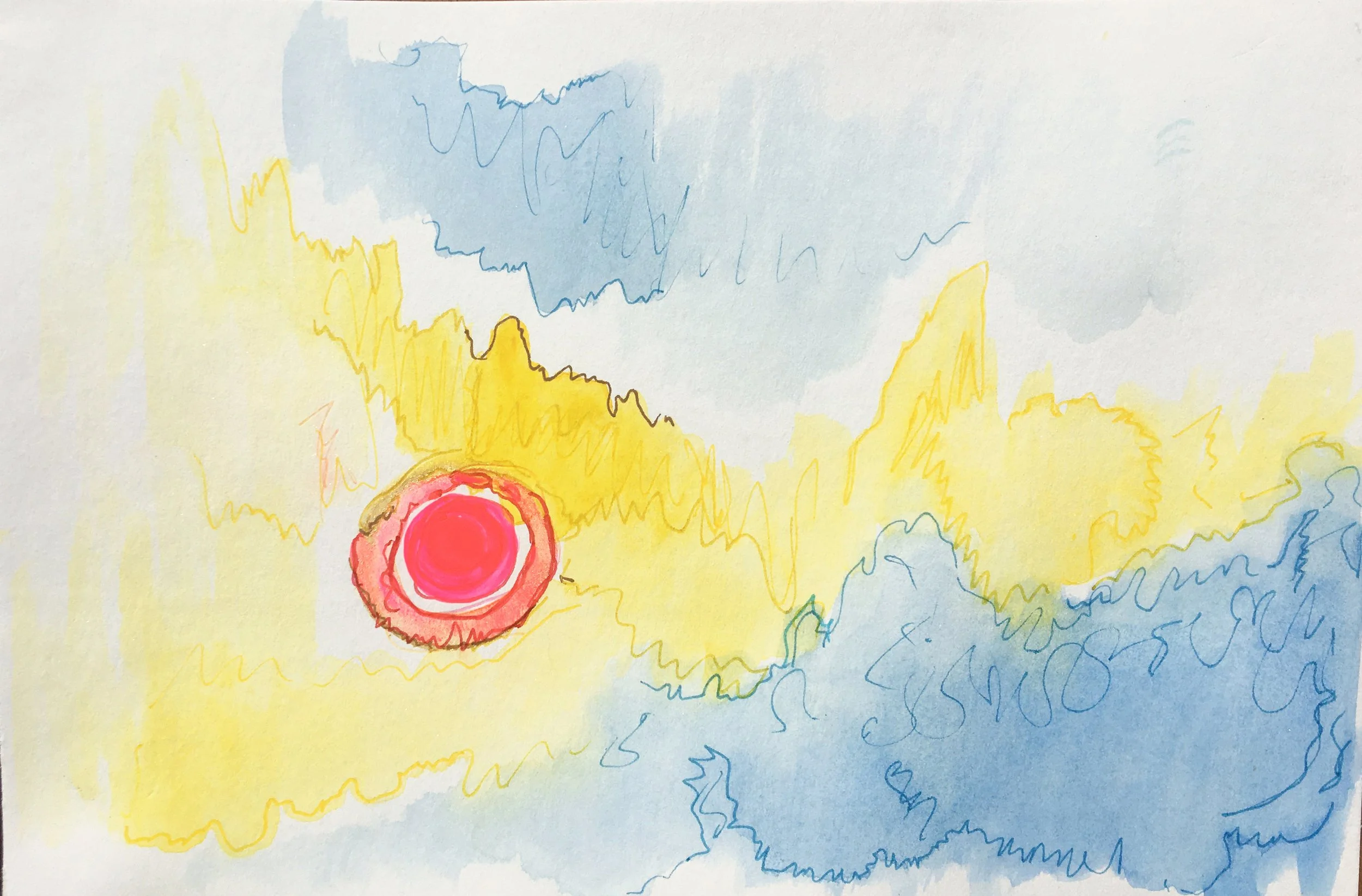
By "right-brained writing," I don't literally mean writing with one hemisphere of the brain. I mean experimenting with another mode of sensemaking: translating sensory and felt experience into visual and metaphoric form.
And somewhat ironically, what initially felt like stepping away from "productive" writing became a shortcut. An image could sometimes hold something I would have needed pages to describe.
Even my efficiency-oriented mind could get behind that.
Perhaps that is part of what the unknown asks of us: not simply to move forward without knowing where we are going, but to loosen our attachment to the roads we already recognize.
For me, the off-road route revealed possibilities I couldn’t see from the proverbial highway. By day three, I was painting again after nearly 20 years away from it. What began as an experiment in writing had somehow opened a door back into another way of knowing.